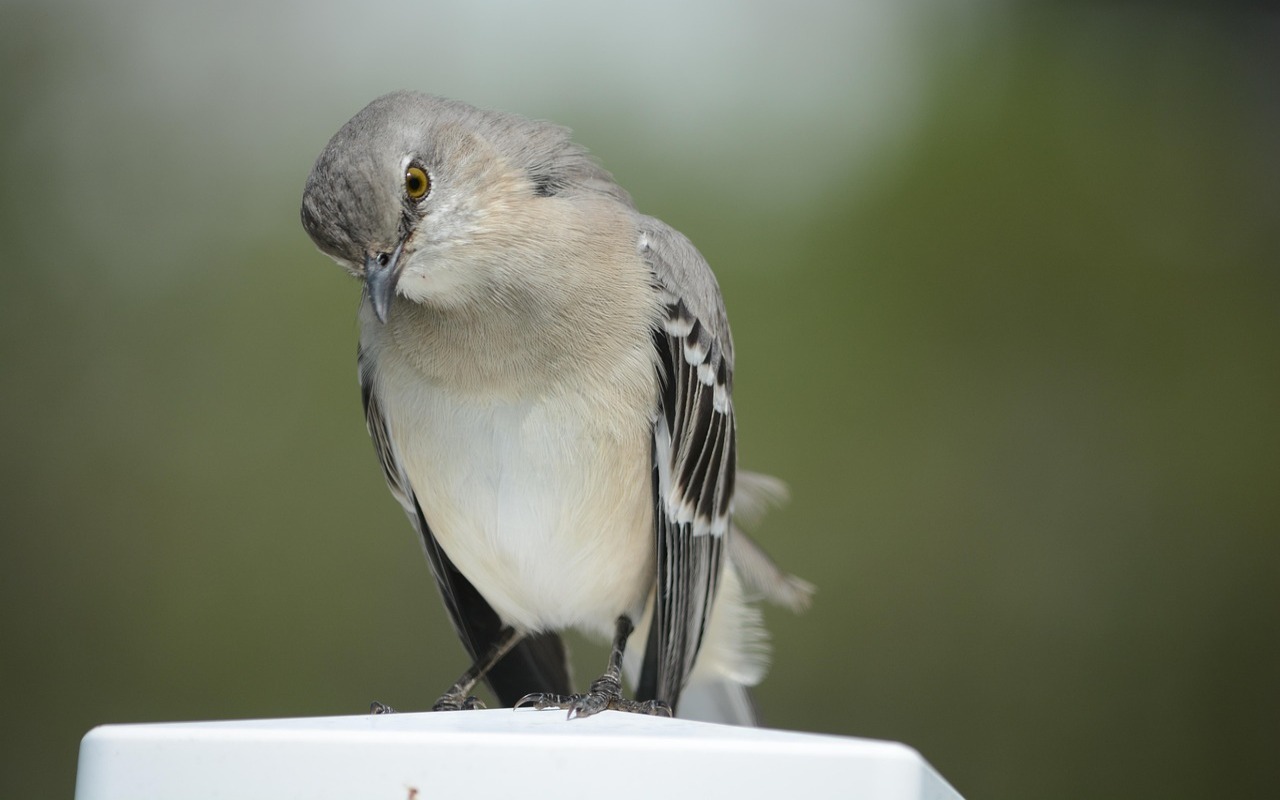
If you are currently struggling with managing aggressive Northern Mockingbirds dominating your winter feeder, you know just how relentless a single bird can be. One minute your backyard is filled with a lively flock of juncos and goldfinches, and the next, a solitary grey hurricane dive-bombs every visitor in sight.
This combative behavior is completely normal, but it can quickly clear out your feeding station and leave smaller songbirds out in the cold.
Mockingbirds do not simply share space when winter freezes settle over the neighborhood. Understanding why they stake a claim on your yard is the first step toward restoring peace to your feeding stations.
Why Mockingbirds Turn Into Backyard Bullies in Winter
During the spring and summer breeding seasons, birds defend territory to protect nests and mates. In the dead of winter, Northern Mockingbirds flip a biological switch and defend food sources with the exact same ferocity. While many backyard birds flock together for winter survival, mockingbirds remain strictly solitary and will claim a reliable calorie cache as their personal property.
When temperatures drop, the insects that make up the bulk of their warm-weather diet vanish completely. Mockingbirds must quickly shift their feeding habits to consume high-fat suet, insects preserved in mealworm dishes, and cold-hardy wild berries. A backyard feeder packed with rich suet or soft food looks like an absolute goldmine worth fighting for until spring.
If your yard features a single, centralized feeding station, a mockingbird views the entire setup as one defensible territory. The bird will choose a high vantage point nearby, like a fence post, tree branch, or roofline, and launch aerial attacks against any bird attempting to feed.
It does not matter if a downy woodpecker or white-throated sparrow poses zero threat; to the mockingbird, every beak is stealing its winter insurance policy.
Break the Line of Sight with Multiple Feeding Zones
The most effective backyard hack shared by experienced birders is breaking the mockingbird’s visual control over your yard. A single mockingbird can easily defend two or three feeders if they are hanging right next to each other on the same pole. If the bird cannot see all the feeders at the exact same time, its defensive strategy falls apart.
Spread your feeding stations out across different areas of your property to exploit this natural blind spot. Place one station in the front yard, one on the back patio, and a third around the blind side of a garage or shed.
- Position secondary feeders on opposite sides of your house so no single high perch offers a view of both.
- Use evergreen shrubs, dense hedges, or patio screens to create physical sight barriers between hanging stations.
- Scatter small ground-feeding trays beneath dense foundation plantings where timid sparrows and juncos can forage out of sight.
When a mockingbird has to fly around a corner to chase a chickadee, other birds will immediately slip in to use the abandoned feeder. The bully quickly becomes exhausted trying to patrol separate zones and will eventually settle down to guard just one preferred spot. This guarantees that your visiting winter flocks always have a safe, quiet backup station available.
Swapping Out Foods That Fuel the Fight
Mockingbirds have very specific preferences when it comes to human-provided backyard bird food. They do not possess the heavy, conical crushing bills of finches, grosbeaks, or cardinals, which means they physically struggle to open thick seed hulls. If your feeders are stuffed with soft treats, you are accidentally rolling out a red carpet for a yard bully.
You can significantly calm feeder drama by tailoring the menu in your primary feeding zones to foods mockingbirds dislike. Fill your main tube and hopper feeders with hard, heavy-shelled seeds that smaller clinging birds and seed-crackers love.
- Black oil sunflower seeds in the shell require bill strength that mockingbirds do not readily exert in winter.
- Safflower seed has a hard exterior and a slightly bitter taste that mockingbirds, squirrels, and blackbirds typically avoid.
- Whole peanuts in the shell cater directly to jays, nuthatches, and woodpeckers while frustrating softer-billed birds.
- Nyjer seed, also sold as thistle, is far too small for mockingbirds to bother with but keeps goldfinches and redpolls happy.
Save the soft, high-energy foods for specialized feeders or pull them entirely for a week or two if an individual mockingbird is causing chaos. Once the bird realizes that your main feeders require heavy cracking work, its possessive interest drops substantially. The bully will often move on to search for softer natural food elsewhere in the neighborhood.
Feeder Styles That Mockingbirds Cannot Monopolize
Beyond food choices, feeder mechanics play a major role in keeping a dominating mockingbird in check. Northern Mockingbirds measure between eight and ten inches in length, and they have long, stiff tail feathers that make it hard to squeeze into tight spaces.
Small birds like chickadees, titmice, and nuthatches can effortlessly navigate micro-habitats that leave a mockingbird stuck on the outside.
One of the best gear upgrades you can make is investing in a caged feeder with outer wire grids. Quality caged models feature heavy wire mesh with exact 1.5-inch openings that allow small songbirds through while blocking larger bullies entirely.
- Wire mesh cage guards with 1.5-inch grid openings let clinging birds inside while stopping mockingbirds, starlings, and jays cold.
- Upside-down suet cages force birds to cling from below, a gymnastic trick woodpeckers and nuthatches master easily while mockingbirds struggle to maintain grip.
- Small perchless tube feeders require birds to cling directly to wire netting, which quickly tires out the longer legs and heavier frame of a mockingbird.
- Weight-activated spring feeders can be calibrated to snap shut under the weight of an eight-inch bird while remaining open for lighter species.
Forum birders frequently report success by simply adding a dome baffle directly over small hanging feeders. Lowering the clear dome close to the feeding ports prevents mockingbirds from perching on top, while smaller species can easily dart up underneath to grab a quick bite. These physical barriers level the playing field without denying anyone a meal.
Setting Up a Sacrificial Feeding Station
Sometimes, the simplest way to manage an aggressive bird is to give it exactly what it wants, but strictly on your terms. Instead of fighting the mockingbird’s natural territorial instinct, use that drive to steer the bird away from the rest of your visitors. Birders call this running a sacrificial feeder or a decoy station.
Pick the specific corner of your yard where the mockingbird already spends most of its daylight hours watching the area. Hang an open platform feeder or a standard suet cage in that exact zone and stock it with its absolute favorite winter foods.
- Rendered beef suet cakes containing dried fruit or peanut meal will immediately capture a mockingbird’s attention.
- Dried mealworms offered in a shallow dish serve as an irresistible protein boost during freezing weather.
- Chopped fresh apples, orange halves, raisins, and dried currants mimic the natural winter berries mockingbirds seek out in the wild.
Once the mockingbird establishes dominance over this single high-value feeder, it will spend nearly all of its energy guarding that single prize. Keep this station well-stocked so the bird never feels compelled to forage at your hard-seed feeders.
To keep the decoy station healthy and safe for its resident defender, clean the feeding surfaces every two weeks using a solution of one part household bleach to nine parts warm water.
Rinse the equipment thoroughly with clean water and let it dry completely in the sun before refilling. A well-managed sacrificial station satisfies the bully, keeps the food sanitary, and finally lets your other winter birds eat in peace.